When you begin your fertility or hormone-healing journey, especially with Polycystic Ovary Syndrome (PCOS) involved, one message gets repeated often: “PCOS is complicated.”
But here’s the truth, PCOS isn’t just one condition. It shows up differently in every woman. By identifying which type you have, you can stop trying random remedies and start choosing natural solutions that truly match your body’s needs.
This guide will help you understand the four main types of PCOS, how to spot your own pattern, and what kind of lifestyle and nutritional support may work best for you.
Why Knowing Your PCOS Type Matters
PCOS is generally diagnosed based on three key factors:
- Irregular or absent ovulation
- High levels of male hormones (androgens)
- Ovaries that show multiple small follicles on ultrasound
However, the root causes behind these symptoms can differ widely from one woman to another. Some are driven by insulin resistance, while others stem from stress, inflammation, or post-pill hormone imbalance.
Understanding your type helps you:
- Choose the right foods, supplements, and routines for your body
- Avoid generic advice that doesn’t fit your situation
- Feel confident and in control of your healing
Because once you know your pattern, you can stop fighting your body, and start working with it.
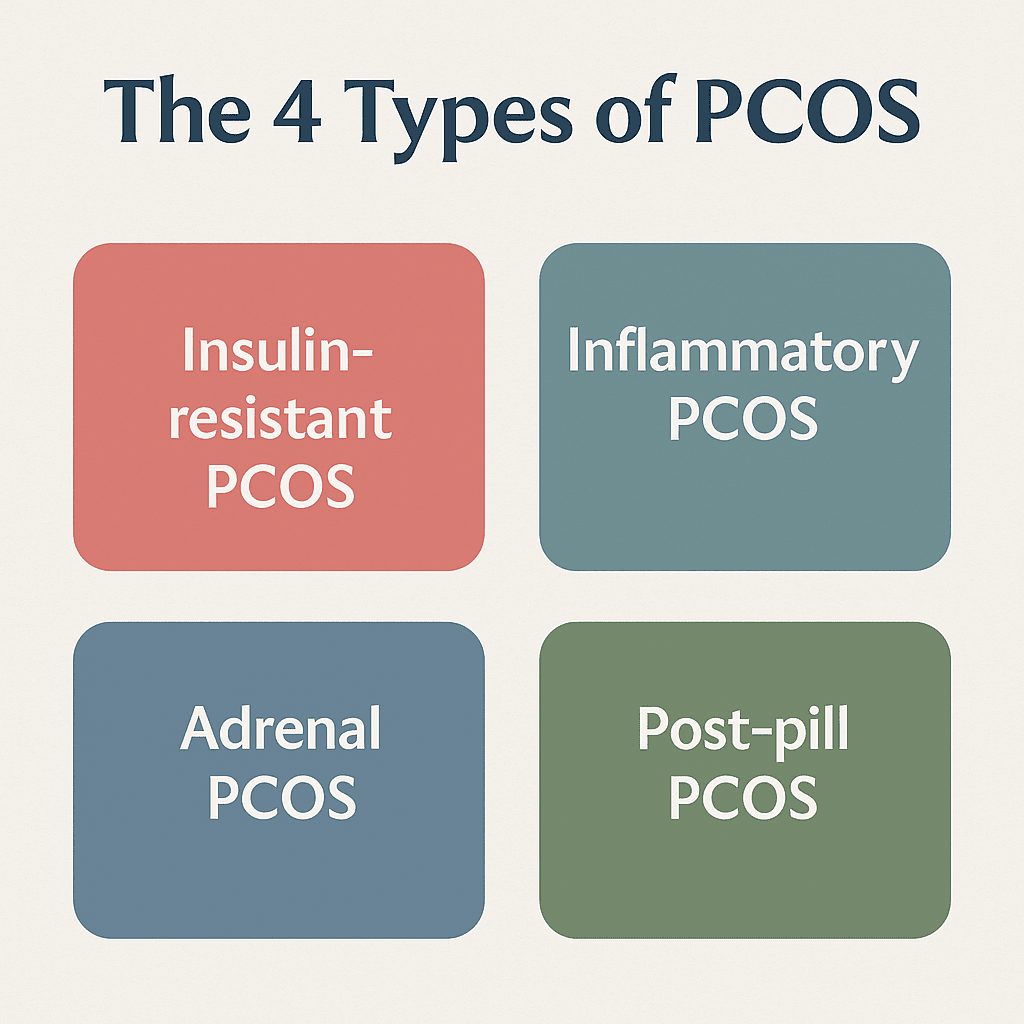
The 4 Main Types of PCOS
Below are the four most common PCOS types recognized by practitioners and supported by research.
1. Insulin-Resistant PCOS (IR-PCOS)
What’s happening:
This is the most common form, affecting up to 70% of women with PCOS. When your cells stop responding properly to insulin, your pancreas releases even more to compensate. The excess insulin stimulates your ovaries to produce more androgens (male hormones), which interferes with ovulation.
Possible signs:
- Sugar or carb cravings
- Weight gain around the belly
- Feeling tired after eating
- Irregular cycles or missing periods
- Elevated fasting insulin or glucose on blood tests
Supportive steps:
- Focus on a low-glycemic, whole-food diet
- Add strength or resistance training
- Prioritize high-fiber meals and steady blood sugar balance
- Consider natural insulin-support herbs or nutrients under professional guidance
This type improves significantly when blood sugar is managed consistently, small daily changes can make a big difference.
2. Post-Pill PCOS
What’s happening:
This type appears in women who developed PCOS symptoms shortly after stopping hormonal birth control. The pill suppresses natural hormone production; when you stop, your body may take time to regain balance. During this transition, androgens may temporarily spike, causing acne, hair growth, or irregular cycles.
Possible signs:
- You had regular periods before using the pill
- Symptoms began 3–6 months after stopping
- You don’t have signs of insulin resistance
Supportive steps:
- Be patient, your body is recalibrating
- Eat nutrient-dense foods rich in zinc, vitamin B6, and vitamin E to support ovulation
- Focus on liver health to clear excess hormones
- Support your cycle naturally with herbal teas and gentle lifestyle resets
This type usually balances out with time and the right nourishment.
3. Inflammatory PCOS
What’s happening:
Chronic, low-grade inflammation from the gut, food sensitivities, or environmental toxins can disrupt hormone balance and trigger PCOS symptoms, even in women who aren’t insulin resistant.
Possible signs:
- Bloating, IBS, or gut issues
- Skin inflammation (eczema, acne)
- Fatigue and brain fog
- Achy joints or autoimmune conditions
- Lean body type but ongoing hormonal symptoms
Supportive steps:
- Adopt an anti-inflammatory diet (fruits, vegetables, omega-3s, herbs, turmeric, ginger)
- Reduce caffeine, alcohol, and processed foods
- Prioritize gut healing with probiotics and fiber-rich plants
- Ensure proper rest and stress regulation
Reducing inflammation helps your body reset hormonal communication and improve ovulation.
4. Adrenal PCOS
What’s happening:
This type occurs when stress hormones, not insulin, are the main driver. Chronic stress pushes your adrenal glands to release high levels of DHEA-S, an androgen that disrupts the normal hormonal rhythm.
Possible signs:
- High DHEA-S levels on bloodwork
- Normal testosterone and insulin levels
- Feeling wired but tired
- Irregular cycles during stressful periods
- Trouble sleeping or recovering after long days
Supportive steps:
- Build a calming morning and bedtime routine
- Practice breathing, journaling, or yoga for stress release
- Support adrenal health with balanced meals (never skip breakfast)
- Consider adaptogenic herbs under professional guidance (ashwagandha, rhodiola, holy basil)
When your nervous system is balanced, your hormones can follow.
How to Identify Your Type
Here’s a simple self-checklist to guide your next steps:
Look back at your history: When did your symptoms start? Was there a trigger (like the pill, stress, or weight change)?
Review your labs: Ask your doctor about fasting insulin, DHEA-S, testosterone, and inflammation markers.
Notice lifestyle patterns: Are cravings, stress, or gut issues part of your story?
Find your primary driver: Which of the four types above sounds most like you?
Test, track, and adjust: PCOS types can overlap, so stay flexible. What starts as insulin-resistant PCOS can improve but leave behind inflammatory signs, your body is dynamic.
Why This Matters for Fertility and Hormone Balance
When you use a personalized PCOS approach, everything begins to shift.
You might notice:
- More consistent ovulation
- Shorter, more regular cycles
- Fewer acne or hair-growth issues
- A calmer mood and steadier energy
Most importantly, you rebuild trust in your body. Instead of treating PCOS as a lifelong curse, you begin to see it as your body’s signal a message guiding you toward balance.
How The Healthy Woman Can Support You
At The Healthy Woman, we specialize in helping women understand their PCOS type and choose the right blend of herbal supplements, teas, and natural protocols that support fertility, hormone balance, and overall wellness.
Our approach combines the wisdom of traditional herbal medicine with modern research, focusing on safe, natural, and affordable alternatives to conventional treatments.
Whether your driver is insulin, inflammation, or stress, our curated blends and meal plans are crafted to help you heal from the root.
You don’t need to guess your way through PCOS. You can learn, adapt, and thrive.
Final Thoughts
PCOS isn’t one-size-fits-all and neither should your healing be. The most powerful step you can take is understanding your unique PCOS type and responding to your body with intention, patience, and compassion.
At The Healthy Woman Jamaica, we’re here to help you decode your pattern, nourish your hormones, and restore your natural rhythm so you can move beyond “managing PCOS” and start living freely again.
🔗 Explore our PCOS Support Collection: CLICK HERE
Disclaimer: This article is for educational purposes only and is not intended as medical advice. Always consult your healthcare provider before starting new supplements or treatment plans.