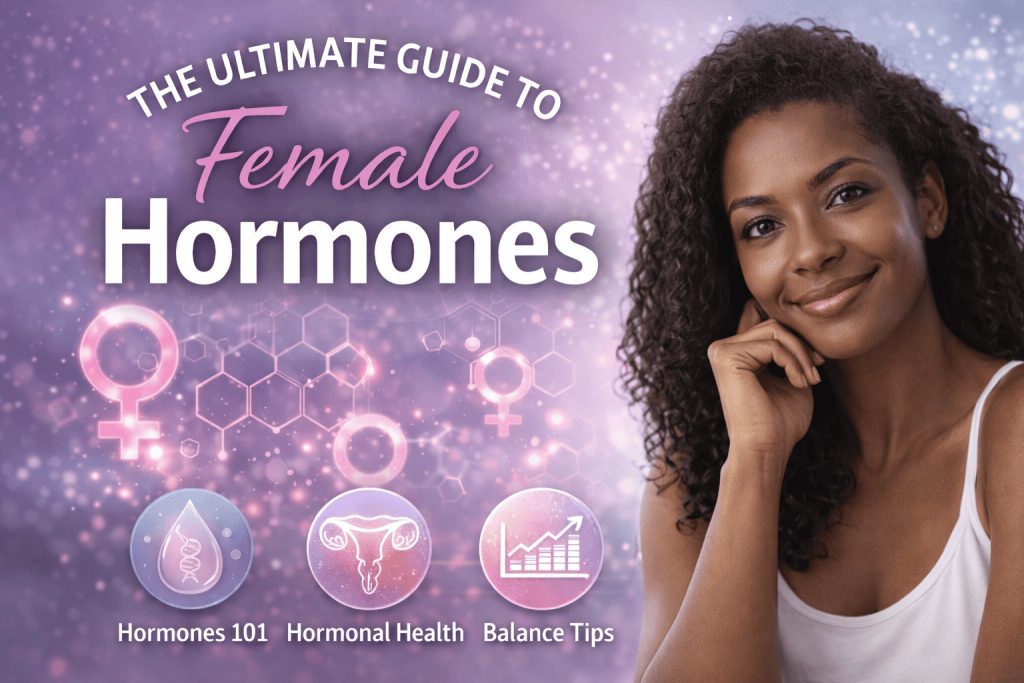
Your hormones are powerful chemical messengers that move through your blood and tell your organs what to do and when to do it.
They affect everything from your mood and energy levels to your menstrual cycle, metabolism and even your skin. Small shifts in hormone levels can have big effects on your body.
Understanding how these hormones work and what happens when they get out of balance, is key to overall health and wellness.
In this guide, we’ll break down the major female hormones, how they affect your body, what happens when they’re out of balance, and simple ways to support hormone harmony.
What Are Hormones? A Simple Explanation
Hormones are chemical messengers produced by glands in your endocrine system. They travel through your bloodstream and tell tissues and organs what to do. They regulate many major body functions including:
- Metabolism
- Reproduction and fertility
- Mood and energy
- Growth and development
- Sleep cycles
- Appetite and weight control
A small change in hormone levels can affect your whole body. That’s why hormonal balance matters so much.
Primary Female Hormones and What They Do
1. Estrogen
Estrogen is often called the “primary female hormone.” It’s produced mainly by the ovaries, but also in smaller amounts by the adrenal glands and fat tissue. Estrogen helps:
- Regulate the menstrual cycle
- Support reproductive system health
- Maintain bone health
- Influence mood and brain function
- Aid in blood vessel function
Too much or too little estrogen can lead to symptoms like irregular cycles, mood swings, and weight changes.
2. Progesterone
Progesterone works closely with estrogen and is most active after ovulation. Its primary roles include:
- Preparing the uterus for pregnancy
- Maintaining a healthy menstrual cycle
- Balancing estrogen levels
- Supporting mood stability
When progesterone drops suddenly, for example right before your period, many women experience PMS symptoms.
3. Follicle-Stimulating Hormone (FSH)
FSH is made by the pituitary gland and drives:
- The growth and development of ovarian follicles (which contain eggs)
- Estrogen production in the ovaries
- FSH peaks early in your cycle to help trigger follicle growth and ovulation.
4. Luteinizing Hormone (LH)
- Also from the pituitary gland, LH:
- Triggers ovulation (release of an egg)
- Signals the ovaries to produce progesterone after ovulation
- The spike in LH is what actually causes ovulation each cycle.
5. Testosterone
Most people think testosterone is only a male hormone, but women make it too. In females, testosterone helps to:
- Supports libido
- Helps build muscle
- Affects energy and mood
- Supports ovarian function
Levels are much lower in women than men, but changes can still affect health and well-being.
How These Hormones Work Together
Your brain and ovaries communicate constantly to regulate your cycle through the hypothalamic-pituitary-gonadal (HPG) axis. It works like this:
The hypothalamus releases GnRH
This signals the pituitary gland to release FSH and LH
FSH and LH signal the ovaries to produce estrogen and progesterone
When estrogen rises, it helps follicles grow. A sudden increase in estrogen triggers a surge in LH, which leads to ovulation. After ovulation, progesterone rises to prepare the womb for possible pregnancy. If pregnancy doesn’t happen, progesterone falls and a period starts.
Why Hormone Imbalance Happens
Hormonal imbalance happens when your body has too much or too little of a hormone. Because hormones influence so many systems, imbalance can cause a range of symptoms. Common causes include:
- Stress and adrenal strain
- Poor diet and inflammation
- Insulin resistance
- Thyroid dysfunction
- PCOS (Polycystic Ovary Syndrome)
- Aging and menopause transitions
- Birth control and hormonal medications
- Sleep disruption
Even small fluctuations can affect your daily life.
Common Signs Your Hormones Are Out of Balance
Since hormones affect so many systems, imbalance can show up in many ways. Common symptoms include:
- Irregular or painful periods
- Extreme cramps or heavy bleeding
- Acne, excess facial or body hair
- Unexplained weight gain or stubborn belly fat
- Mood swings, anxiety, or depression
- Fatigue and low energy
- Sleep problems
- Difficulty conceiving
- Hair thinning or loss
If you have multiple symptoms, it’s worth evaluating hormone balance with a provider or wellness professional.
How Imbalance Shows in PCOS
One of the most common hormone conditions is PCOS(Polycystic Ovary Syndrome). It happens when your ovaries produce too many androgens (male-type hormones), causing reproductive hormone imbalance.
Symptoms may include irregular cycles, ovarian cysts, acne, excess hair growth, and difficulty ovulating.
PCOS is linked to insulin resistance and can affect fertility and metabolism. Hormonal balance is a key part of managing it.
Hormones and Your Brain, Mood & Energy
Your hormones don’t just regulate your cycles, they also communicate with your brain. Estrogen has a big impact on:
- Mood stability
- Emotional regulation
- Cognitive function
And progesterone supports calm and may have soothing effects on the nervous system. When hormone levels shift, mood swings, anxiety, or irritability may follow.
Simple Ways to Support Natural Hormone Balance
You can support your hormones naturally with daily habits:
Eat Balanced Foods
Focus on whole foods, leafy greens, healthy fats, and fiber as these all help regulate hormone production and insulin response.
Prioritize Sleep
Deep sleep helps your body reset hormone levels overnight.
Move Your Body
Gentle movement like walking or yoga can support circulation and reduce stress hormones.
Reduce Sugar & Processed Foods
High sugar and processed foods spike insulin and disrupt hormone balance.
Manage Stress
Stress releases cortisol, which can throw off reproductive hormones. Meditation, deep breathing, or herbal support help manage stress.
Even small changes over time can make a big difference.
Why Hormone Balance Matters for Your Life
Balanced hormones support:
- Predictable cycles
- Healthy pregnancy and fertility
- Better energy and metabolism
- Clearer skin and stable mood
- Strong sleep and emotional wellbeing
- Lower inflammation and pain
Your hormones are the foundation of your health. When they’re in balance, your body runs more smoothly and when they’re out of balance, symptoms pop up, often confusing, overlapping, and frustrating.
When to See a Healthcare Provider
If you experience severe symptoms, sudden changes, or symptoms that affect daily life, talk to a healthcare provider. They can run hormone tests and help you create a plan that’s right for your body and goals.
Final Thoughts
Your hormones do far more than control your period, they also influence how you feel, how you think, how your metabolism works, and how your body reacts to stress and food. Understanding them gives you power over your health.
Balanced hormones mean a balanced life,more energy, more clarity, more comfort, and more control.
Start with small changes, listen to your body, and support your hormones one step at a time.
Your body is not random; it’s communicating with you. When you understand the language of hormones, you can make informed choices that support your long-term health inside and out.