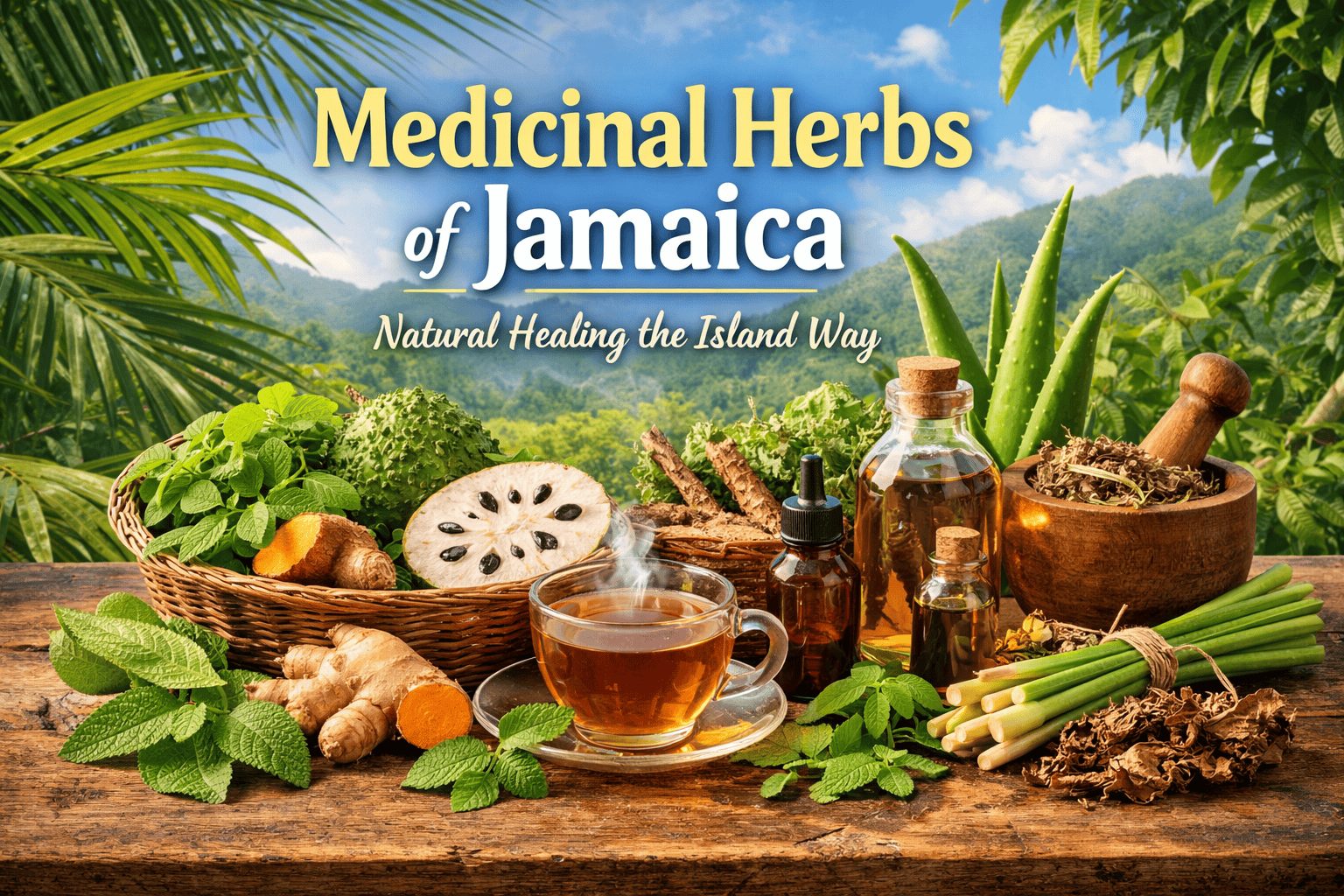
Jamaica is more than beaches and music. It is a land deeply rooted in plant wisdom, where healing has always come from the soil, the sun, and generations of knowledge passed down through bush teas, roots tonics, and herbal baths.
Long before pharmacies existed on the island, Jamaican medicinal herbs were used to support digestion, cleanse the blood, balance hormones, boost immunity, and restore energy.
Today, these same herbs are being rediscovered, this time through a modern wellness lens that blends tradition with science.
If you’re new to herbs or curious about natural healing, this guide breaks everything down simply, clearly, and practically, no confusing jargon, no exaggeration, and no fear-based claims.
Why Jamaican Medicinal Herbs Are So Powerful
Jamaican medicinal herbs are uniquely potent for three main reasons:
- Rich volcanic soil packed with minerals
- Tropical sun exposure that increases plant compounds
- Traditional preparation methods refined over generations
Many herbs grown in Jamaica contain higher concentrations of bioactive compounds than the same plants grown elsewhere. This is why bush medicine has remained relevant, even as modern medicine advanced.
1. Cerasee (Momordica charantia)
Best known for: Cleansing, blood sugar balance, skin support
Cerasee is one of Jamaica’s most trusted bush teas. Families regularly give it to both children and adults to help cleanse the body and support internal balance.
Common traditional uses include:
- Supporting healthy blood sugar levels
- Promoting clear skin
- Encouraging gentle detoxification
- Supporting digestion
Beginner tip: Cerasee is naturally bitter and that bitterness is part of what stimulates digestion and metabolic processes.
2. Soursop Leaf (Annona muricata)
Best known for: Relaxation, immune support, sleep support
In Jamaican households, people drink soursop leaf tea to calm the nervous system and help the body fully unwind
Traditionally used for:
- Supporting restful sleep
- Calming the nervous system
- Immune system support
- General wellness maintenance
Unlike the fruit, the leaves are where the herbal value lies.
3. Guinea Hen Weed (Anamu)
Best known for: Immune support, inflammation balance
This herb smells strong—and Jamaicans know it for its powerful presence. Locals call it anamu, and for generations, people have used it to protect the body and build strength from the inside out.
Traditional uses include:
- Supporting immune defense
- Promoting joint comfort
- Supporting respiratory health
People commonly prepare it as a tea or tincture, and many Jamaicans regard it as one of the island’s most respected healing plants.
4. Fever Grass (Lemongrass)
Best known for: Relaxation, digestion, stress support
Fever grass is often the first herb Jamaicans turn to when the body feels “off.”
Common uses:
- Encouraging relaxation
- Supporting digestion
- Helping the body unwind before sleep
- Gentle immune support
It has a mild citrus flavor, making it one of the easiest herbs for beginners.
5. Aloe Vera (Sinkle Bible)
Best known for: Digestive support, skin health
In Jamaica, aloe is commonly used internally and externally.
Traditional uses include:
- Supporting digestion
- Soothing the gut
- Supporting skin health when applied topically
Internally, aloe is used carefully and in small amounts due to its potency.
6. Strong Back (Morinda royoc)
Best known for: Vitality, stamina, reproductive health
Strong Back is traditionally associated with energy and reproductive wellness, especially in men—but women benefit too.
Traditionally used for:
- Supporting physical vitality
- Encouraging circulation
- Supporting reproductive health
It’s commonly found in roots tonics and vitality blends.
7. Moringa
Best known for: Nutrient support, energy, overall wellness
Moringa is one of the most nutrient-dense plants grown in Jamaica.
Benefits include:
- Natural vitamin and mineral support
- Energy and vitality
- Immune system nourishment
It’s often called a “superleaf” for good reason.
8. Ginger
Best known for: Digestion, circulation, immune support
Ginger is a staple in Jamaican kitchens and herbal medicine cabinets.
Traditionally used for:
- Supporting digestion
- Encouraging circulation
- Immune support
- Relieving occasional discomfort
Fresh ginger tea is often combined with honey or lime.
9. Turmeric
Best known for: Inflammation balance, joint support
Turmeric root has been used traditionally to support the body’s natural inflammatory response.
Often used for:
- Joint comfort
- Digestive balance
- Overall wellness support
Best absorbed when paired with black pepper.
10. Peppermint
Best known for: Digestive comfort, bloating relief
Jamaicans drink peppermint tea after meals to ease digestion and reduce bloating.
Traditional uses include:
- Easing bloating
- Supporting digestion
- Refreshing the body
It’s gentle, effective, and ideal for beginners.
How Jamaicans Prepare Medicinal Herbs
- Bush teas (boiled leaves or roots)
- Roots tonics (slow-infused blends)
- Herbal baths
- Capsules and tinctures (modern use)
Today, many people prefer capsules, teas, and drops for convenience and consistency—without losing the traditional benefits.
Jamaican Herbs in Modern Wellness
Modern herbal brands now focus on:
- Standardized dosing
- Clean sourcing
- Beginner-friendly formats
- Education without exaggerated claims
This bridges the gap between traditional wisdom and modern trust.
Why Quality & Source Matter
Not all herbs are created equal. Poor sourcing, improper drying, or incorrect combinations can reduce effectiveness.
When choosing herbal products:
- Look for clear ingredient lists
- Avoid exaggerated medical claims
- Choose brands rooted in education and tradition
Final Thoughts: Island Wisdom, Modern Living
Jamaican medicinal herbs aren’t trends. People have relied on them for generations to support everyday wellness.
Healing doesn’t have to be complicated. Sometimes, it starts with the same plants our ancestors trusted, just presented in a way that fits modern life.