
If you’re trying to conceive, you’ve probably heard the term implantation, but what actually happens? It can feel confusing, even mysterious. Yet understanding implantation is powerful: it’s the moment your fertilized egg embeds into the uterus and begins the first step of pregnancy. In this guide, you’ll learn:
What Happens During Implantation?
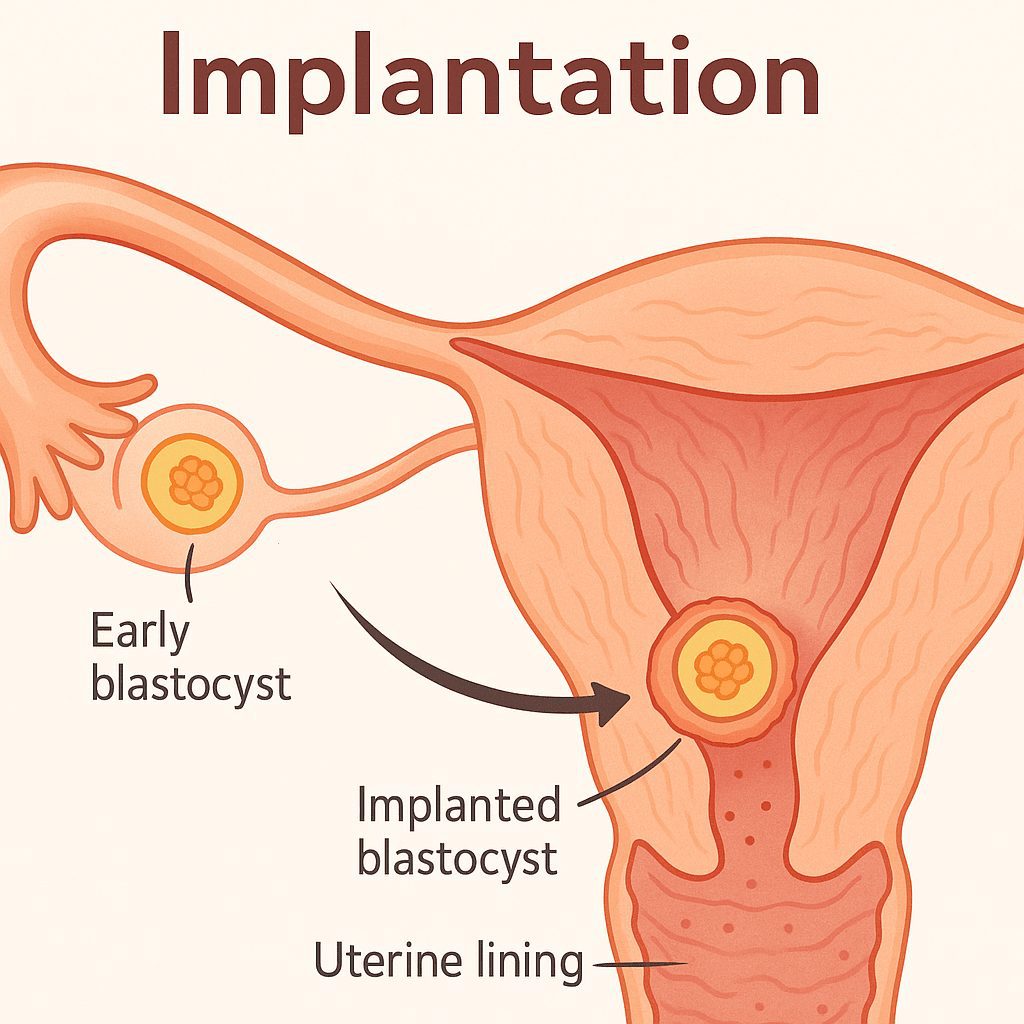
Implantation occurs when the blastocyst (the fertilized egg after several divisions) attaches itself into the lining of the uterus (endometrium) and begins connecting with your bloodstream and uterine tissue.
Here’s a simplified timeline:
Day 0-6 after conception: The fertilised egg travels through the fallopian tube to the uterus.
Day 6-10 roughly: The blastocyst hatches and begins attaching to the uterine lining.
Once attached, it embeds deeper, begins forming the placenta, and sends hormones (like hCG) that signal pregnancy.
Because this process demands strong uterine lining, good blood flow, and balanced hormones, it’s one of the earliest steps you can influence naturally.
When Does Implantation Occur?
For many women, implantation happens about 6-12 days after ovulation.
If you have a 28-day cycle and ovulated around day 14, you might expect implantation around days 20-26. It’s important to note that not everyone will notice signs, and absence of signs doesn’t mean something is wrong.
Early Signs of Implantation
Some women notice subtle signals when implantation occurs. These may include:
- Light spotting or ‘implantation bleeding, which are tiny spots of pink or brown discharge, often shorter and lighter than a regular period.
- Mild cramping this is gentle, short-lived twinges when the blastocyst embeds in the lining.
- Breast tenderness or slight swelling as pregnancy hormones begin.
- Mood shifts, fatigue or bloating can be brought be early hormone changes.
Note: These signs overlap with PMS and normal cycle symptoms, and they are not guaranteed proof of implantation or pregnancy. A pregnancy test or blood work remains the most reliable confirmation.
Why Implantation Matters for Fertility
When implantation occurs smoothly, it sets the foundation for pregnancy: healthy uterine lining, good blood flow, and early hormone release. If this step is delayed or compromised, it may affect:
- The ability of the embryo to connect and grow
- Future hormone signalling and cycle health
- The quality of the uterine environment for implantation
By focusing on supporting your body before and during implantation, you give yourself a stronger chance at fertility success and not just “getting pregnant,” but sustaining healthy early pregnancy.
Natural Ways to Support Implantation & Early Pregnancy Health
Here are beginner-friendly strategies you can adopt to support your body during this important time.
1. Build a Nutritious Base
- Eat plenty of leafy greens, whole grains, lean protein, and foods rich in omega-3 fatty acids (like fish or flaxseed).
- Ensure you’re getting enough iron, folate, zinc, and vitamin D as these nutrients support uterine lining health and early pregnancy.
- Avoid excessive refined sugars, processed foods and high caffeine loads as they can affect blood-sugar balance and inflammation.
2. Support Uterine Health & Blood Flow
- Gentle movement such as walking, yoga or light strength training improves circulation to your pelvis and uterus.
- Incorporate herbs and smoothies that support uterine tone (under guidance): for example, red raspberry leaf or nettles post-ovulation.
- Stay hydrating and reduce salt and processed foods that cause bloating and poor circulation.
3. Prioritize Stress-Management & Sleep
- Sleep strengthens your hormone reset system, aim for 7-9 hours nightly.
- Practice gentle breathwork, meditation or journaling before bed to reduce cortisol (stress hormone) which can interfere with implantation.
- Keep evening routines simple and relaxing, avoid screens and bright lights 30 minutes before bed to support restful sleep.
4. Time Your Rest Before and After Ovulation
- Reduce high-intensity workouts and extreme calorie deficits around the time of ovulation and expected implantation (days ~20-26 in a 28-day cycle).
- Focus instead on movement you love, gentle strength work, and recovery days.
- Listen to your body: If you feel tired, rest. Rest supports hormones too.
5. Use Reliable Supplements & Herbs (With Guidance)
- Choose trustworthy herbal formulas that support uterine lining, hormone balance, and fertility.
- Ensure any supplement is free from stimulants and made with high-quality, organic herbs.
- Always consult your healthcare provider, especially if you’re taking fertility drugs or have underlying conditions.
What to Do This Week: Your Mini Plan
- Track ovulation: Note your cycle length, ovulation day (with ovulation test or tracking signs) and mark days 6-12 after that as your “implantation window” scrub.
- Choose one nutrient-rich swap: Replace one processed snack with a colourful salad + healthy fat (avocado, nuts).
- Schedule a 20-minute gentle movement each day: walk, stretch or bodyweight exercise.
- Set a nightly ritual: herbal tea, no screens, 10-minute journaling.
- Pause intense workouts if you feel tired or sore, give your body recovery priority.
Final Thoughts
Implantation is a tiny yet powerful moment in the fertility journey. It’s where your body shifts from “just cycling” to “pregnancy mode.” When you understand it, support it, and give it space, you don’t just hope for a positive outcome you actually prepare for one.
You don’t need to control every detail, but you can create the optimal environment: hormone-balanced, well-nourished, structurally supported and rested.
At The Healthy Woman Jamaica, we’re here for you every step of this journey, giving you guides, herbs, and support that match your body’s wisdom. You’re not just trying to conceive, you’re building wellness.