Your reproductive system is one of the most powerful and fascinating systems in your entire body. It’s not just about pregnancy, it’s about hormones, balance, vitality, and overall health.
For women, understanding how the reproductive system works gives you power, the power to spot what’s normal, what’s not, and how to care for your body naturally.
Whether you’re exploring your fertility, managing PCOS, learning about your cycle, or just curious about your biology, this guide breaks everything down, no medical jargon, no confusion, just real talk and simple science.
What Is the Human Reproductive System?
The human reproductive system is a group of organs and hormones that work together to help the body reproduce or, more simply, to create life.
But even when you’re not planning to have children, your reproductive system plays a vital role in:
- Hormone balance
- Bone health
- Skin clarity
- Mood stability
- Energy levels
That’s why at The Healthy Woman; we believe reproductive health isn’t just about fertility, it’s about whole-body wellness.
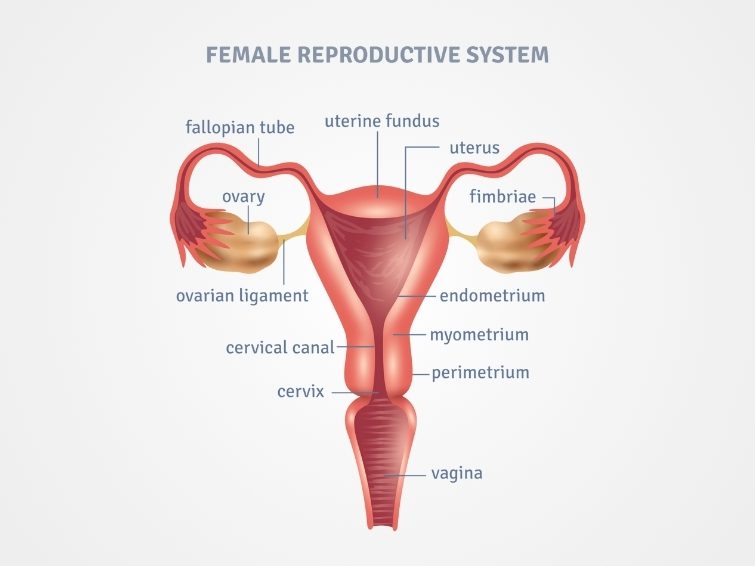
The Female Reproductive System
Let’s start with the female side, since it’s beautifully complex. The main parts include:
1. The Ovaries – The Powerhouses
These two almond-shaped organs sit on either side of your uterus. They:
- Produce eggs (ova)
- Release hormones like estrogen and progesterone
Every month, one of your ovaries releases an egg during ovulation — a key part of your fertility cycle.
2. The Fallopian Tubes – The Pathways
These delicate tubes connect your ovaries to your uterus. After ovulation, the egg travels down this tube.
If sperm is present, fertilization happens here, meaning your egg and sperm meet to form a zygote (the very first cell of life).
3. The Uterus – The Nurturer
Often called the womb, this pear-shaped organ is where a fertilized egg implants and grows into a baby.
Each month, your uterine lining thickens to prepare for pregnancy. If no fertilization happens, that lining sheds and that’s your menstrual period.
4. The Cervix – The Gateway
The cervix is the lower part of your uterus that opens into the vagina. It changes texture and position throughout your cycle becoming softer and more open around ovulation, and firmer afterward.
It also produces different types of mucus that help sperm travel or, at other times, protect against infection.
5. The Vagina – The Connector
Your vagina is a muscular canal that connects your cervix to the outside of your body. It’s flexible, self-cleaning, and full of beneficial bacteria that help keep infections away.
It’s involved in menstruation, intercourse, and childbirth, but the vagina also plays a role in overall pH balance and immunity.
The Male Reproductive System
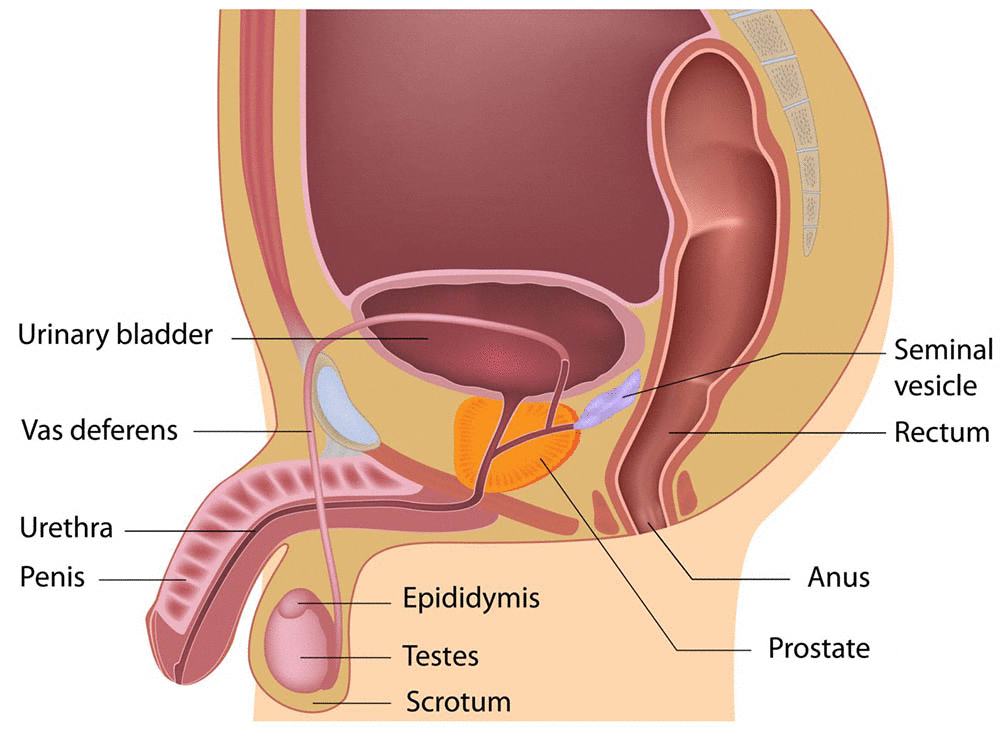
The male reproductive system’s main job is to produce and deliver sperm. It includes:
- Testes (testicles): produce sperm and testosterone.
- Epididymis: stores sperm as they mature.
- Vas deferens: transports sperm during ejaculation.
- Seminal vesicles & prostate gland: add fluids to sperm to create semen.
- Penis: delivers sperm into the female reproductive tract.
Even though these functions seem simple, hormone health and sperm quality depend on overall lifestyle, diet, and stress, just like in women.
Hormones: The Hidden Messengers Behind Reproduction
Behind every reproductive process are hormones which are chemical messengers that tell your organs what to do and when.
Here’s a quick breakdown of the main players:
- Hormone Produced By Main Function
- Estrogen Ovaries Builds uterine lining, regulates cycle, supports skin & mood
- Progesterone Ovaries (after ovulation) Maintains lining, prepares body for pregnancy
- LH (Luteinizing Hormone) Pituitary gland Triggers ovulation
- FSH (Follicle-Stimulating Hormone) Pituitary gland Helps eggs mature
- Testosterone Ovaries & Adrenals (small amounts in women) Boosts libido, energy, and mood
- Prolactin Pituitary gland Stimulates milk production after childbirth
When these hormones work in harmony, you experience balanced cycles, smooth moods, and strong fertility.
When they’re off, think PCOS, irregular cycles, or unexplained weight gain and that’s your body’s call for rebalancing.
The Menstrual Cycle: Your Monthly Blueprint
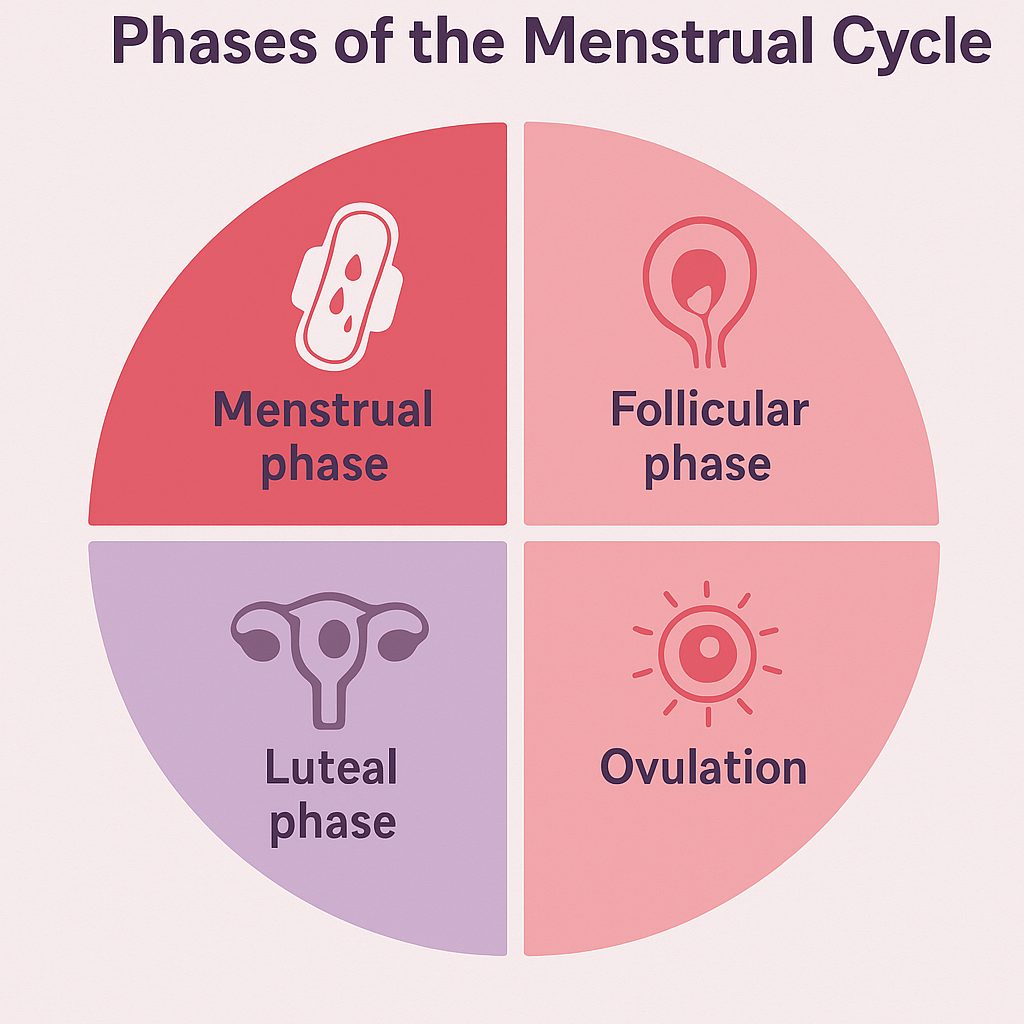
Your menstrual cycle isn’t just a period it’s a full hormonal rhythm that repeats roughly every 28 days (though 21–35 days is normal).
It’s divided into four key phases:
- Menstrual Phase (Day 1–5): Shedding of uterine lining = your period.
- Follicular Phase (Day 6–14): Estrogen rises; eggs mature in the ovaries.
- Ovulation (Around Day 14): LH surges → an egg is released. This is your fertile window.
- Luteal Phase (Day 15–28): Progesterone rises to support potential pregnancy.
If no fertilization occurs, hormone levels drop — and the cycle restarts.
Understanding this rhythm helps you time fertility, manage symptoms, and support your hormones naturally.
What Can Go Wrong: Common Reproductive Issues
Like any system, your reproductive system can face challenges. Some of the most common include:
1. PCOS (Polycystic Ovary Syndrome)
A hormonal condition where the ovaries produce excess androgens (male hormones), disrupting ovulation and causing irregular cycles, acne, and fertility struggles.
Tip: Addressing insulin resistance and balancing hormones through lifestyle changes can dramatically improve PCOS outcomes.
2. Fibroids
Noncancerous growths in the uterus that can cause heavy bleeding, pain, or fertility problems.
They’re often linked to estrogen dominance and inflammation.
3. Endometriosis
A condition where uterine-like tissue grows outside the uterus, leading to severe cramps, pain, and fertility challenges.
4. Hormonal Imbalance
This can include low progesterone, excess estrogen, thyroid dysfunction, or adrenal stress — all of which affect your cycle and fertility.
5. Infections & Inflammation
Vaginal infections, pelvic inflammatory disease, and chronic inflammation can disrupt the delicate reproductive environment.
Supporting Your Reproductive Health Naturally
Here’s where holistic care shines. Small, daily choices create lasting balance.
Nourish with Whole Foods
Eat for hormone harmony:
- Include leafy greens, healthy fats, and lean protein.
- Reduce refined sugar, alcohol, and processed foods.
- Stay hydrated, it helps hormone detox and blood flow.
Move & Manage Stress
- Moderate exercise improves circulation and hormone balance.
- Yoga, walking, and strength training all support reproductive wellness.
Chronic stress, on the other hand, raises cortisol, which blocks progesterone and disrupts cycles — so rest and recovery are just as important.
Herbal Support & Supplements
At The Healthy Woman, we specialize in natural herbal formulas that support the reproductive system.
Our bestsellers include:
Fibroid Fighter Capsules – help balance estrogen and support uterine health.
Fertility & PCOS Support formulas– crafted with herbs that nourish ovulation and cycle regularity, they also support hormonal balance and insulin balance naturally.
These blends are made with high-quality, organic herbs trusted by thousands of women worldwide.
Explore them at thehealthywoman.net
Why Understanding Your Reproductive System Matters
Knowledge is empowerment. When you understand how your body works, you can:
- Spot early signs of imbalance
- Advocate for your health at doctor visits
- Support fertility naturally
- Feel connected and confident in your body
Your reproductive system is not something to fear, it’s something to honor.
Final Takeaway
Your reproductive system is beautifully designed it is a rhythmic, intelligent network that deserves care, patience, and nourishment.
Whether you’re focusing on hormone balance, fertility, or simply feeling your best, the journey begins with understanding.
At The Healthy Woman, we’re here to support that journey, one herb, one blend, one empowered woman at a time.